
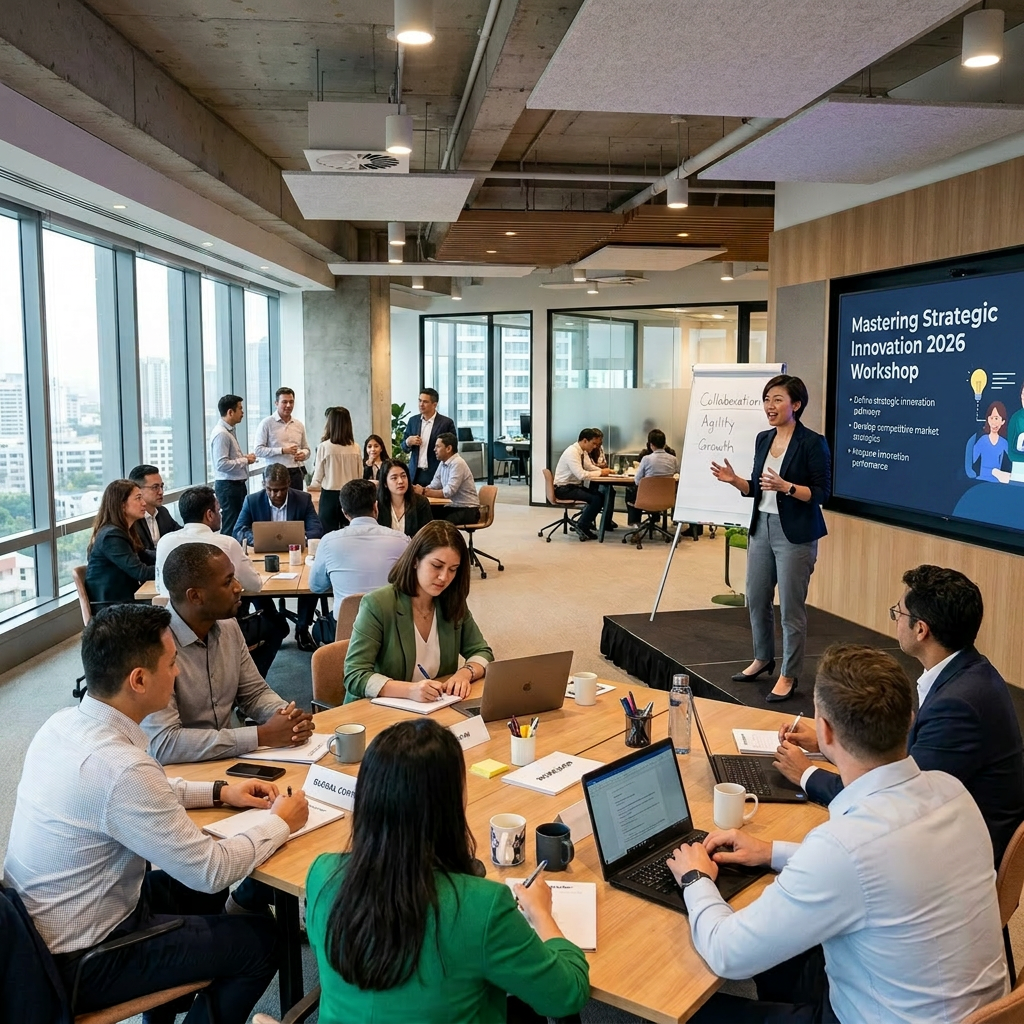
Organizations spend billions on professional learning every year while quietly accepting that very little of it will actually change what people do on Monday morning.
More specifically, when professional learning is a standalone activity, the intended outcome is left entirely up to the participant’s ability and desire to internalize and implement the learning. Facilitators come in for several hours or a few days. It is an event. Calendars are cleared. Time is held sacred. Snacks are provided. And depending on the facilitator, the experience can be anywhere from utterly boring to highly engaging.
Organizations confuse exposure with implementation know-how. They mistake engagement with impact. They assume that inspiration leads to behavior change.
Regardless of where the experience lands on that continuum, the impact of the learning is often left entirely up to chance.
Several years ago, I was “volun-told” that I was going to a conference to build my understanding and explore a potential new program to implement in my school. Prior to that, I had done my research, and I was familiar with the basic tenets of the program. Understanding my stakeholder groups and ultimately my clients, I believed that implementing the program was not going to move the needle on my desired outcomes.
Nonetheless, I went to the conference with my prior knowledge and bias. I attended the first session that provided an overview of the program. The presenters were engaging. People around the room were nodding. There was a palpable sense that maybe this was “The Thing” to be a catalyst for change.
For me, the information presented reaffirmed what I already knew. It did nothing to change my understanding or perception. I left the session feeling that this experience was a waste of time and money. I was unclear about what I expected to see happen differently. I didn’t know what my boss wanted to see happen differently in my building. I couldn’t articulate what adults in my building would be doing differently in the future.
Unfortunately, my experience that day was all too familiar. Engaging in professional learning is often viewed as a passive activity. It is something that is done to you or foisted upon you.
In the past, I’ve been both the recipient and facilitator of professional learning like that.
Over time, I realized the problem was not the quality of the presenters. The problem was the design of the learning itself.
Impactful professional learning is not passive. It is not a one-off experience. There are three key components to effective professional learning.
1. Clarity about what behavior the learning is intended to change.
As a leader, can you describe what people should actually do differently? What observable behaviors are important? What evidence would prove transfer occurred?
Without these things, you cannot measure or evaluate the impact. The learners must have a clear understanding of what they are supposed to do differently. Clarity gives people a genuine chance to succeed.
2. Structured application during the learning (rather than after).
Most professional learning assumes application happens at a point in time in the future. That application of learning happens individually and voluntarily.
But for professional learning to stick, these assumptions must be thrown out.
Depending on the needs of the group and individual learners in the group, the application MUST be integrated into the learning experience. Depending on the behavior change desired, participants may need rehearsal and modeling. Further, they need time and support in the moment, planning, and collaborative problem-solving to overcome obstacles to implementation during the learning event.
It cannot be enough to “teach” the behavior change and then simply say, “Go figure it out.”
3. Intentional systems to support follow-through and follow-up.
While accountability can often be considered a “dirty word” without it and ongoing reinforcement, even highly motivated people tend to revert to familiar habits.
Follow-up and follow-through support is vital. This creates opportunities to provide coaching, peer observation, check-ins, data review, and assist in iterative implementation cycles. It becomes part of the monitoring and evaluation process of the learning and impact, and less about an individual’s ability to unpack and implement in isolation.
When organizations evaluate their training, it should never be about whether people enjoyed the training. It should never be based on whether people attended a training. Rather, it’s about if anything meaningfully changed afterward.
Professional learning should not be designed as an event to attend. It should be designed as a system that changes practice over time.
If professional learning in your organization disappeared tomorrow, what behaviors would actually change? If the answer is “very few,” what does that say about the way learning is being designed?
 Live. Learn. Lead.
Leave a comment